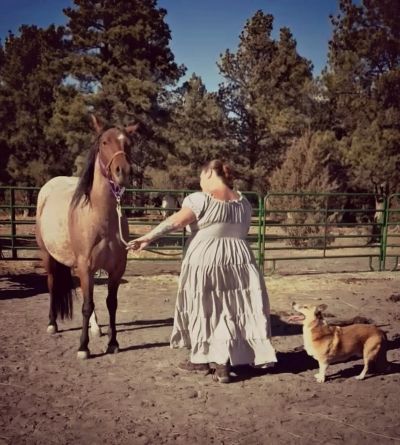
Equine-Assisted Wellness, Connection & Personal Growth
Who We Are
Dragonheart Programs offers trauma-informed, equine-assisted wellness experiences and other wellness services designed to help people better understand themselves, their relationships, and the patterns their bodies and nervous systems use to navigate the world.
Our programs combine the quiet honesty of horses with experiential learning, nervous-system awareness, communication skills, mindfulness, somatic practices, and practical tools for personal growth.
We believe people do not need to be "fixed."
Many of the behaviors people struggle with today began as intelligent adaptations to stress, adversity, difficult relationships, demanding environments, or simply the experiences that shaped them. Hypervigilance, emotional withdrawal, people-pleasing, control, conflict avoidance, difficulty trusting, and trouble setting boundaries may once have served an important purpose.
Our work creates opportunities to notice those patterns, understand what they are trying to accomplish, and practice having more choices.
Horses are uniquely suited to this work because they respond to what is happening in the present moment. They notice pressure, movement, boundaries, attention, regulation, intention, and incongruence without judgment or concern for someone's history, status, diagnosis, or story.
Participants do not need horse experience, and our programs are not about becoming better horsemen. The horse becomes a partner in the learning process.
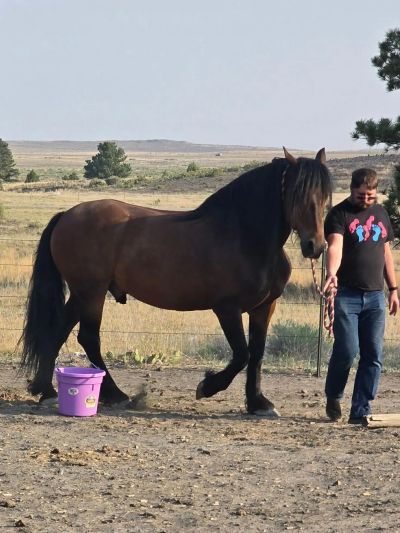
Our Approach
Dragonheart Programs draw from the combined backgrounds and training of Paul and Dianna in areas including psychology and human services, trauma and abuse advocacy, communication and conflict resolution, somatic and body-based wellness, martial arts and Tai Chi, mindfulness and energy practices, hypnosis and NLP, social dynamics, suicide-prevention education, and over a decade of experience working with people and animals.
Rather than relying primarily on classroom instruction, our programs are experiential.
Participants may work with concepts such as:
- nervous-system awareness and regulation
- grounding and present-moment awareness
- boundaries, consent, and personal agency
- communication and emotional congruence
- pressure and release
- trust and relationship patterns
- conflict and repair
- recognizing automatic behavioral patterns
- hypervigilance and environmental awareness
- self-advocacy
- confidence and decision-making
- connection without control
- recognizing healthy and unhealthy influence
- mindfulness and somatic awareness
- resilience and personal identity
- translating insights from interactions with horses into everyday life
Activities are adapted to the individual and the group. Participation is invitational rather than forced, and emotional disclosure is never required.
Our programs are educational and wellness-based and are not substitutes for psychotherapy, medical treatment, crisis intervention, or other licensed healthcare services.
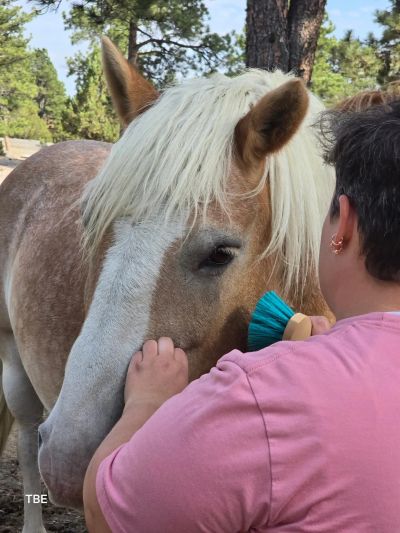
3-Day Equine-Assisted Wellness Programs
Dragonheart Wellness
Three-Day Equine-Assisted Wellness Intensive
Designed for: General adult audiences
Typical Group: 5–8 participants
Dragonheart Wellness is our foundational three-day immersive program. Over three days, participants move beyond simply understanding concepts intellectually and have opportunities to experience them physically, relationally, and practically alongside horses.
The program explores the relationship between thoughts, emotions, body responses, behavior, communication, boundaries, and connection.
Participants learn to recognize their own patterns under pressure and experiment with different responses in a supportive environment.
Experiences may explore nervous-system regulation, mindfulness, communication, trust, boundaries, consent, personal agency, confidence, emotional congruence, healthy influence, relationship patterns, rest, resilience, and connection.
The emphasis is not on forcing vulnerability or digging through someone's past. Instead, we work with what is happening in the present. What do you notice? What does your body do when something changes? What happens when you encounter resistance? Do you push harder, withdraw, freeze, appease, become frustrated, or change your approach? What happens when you are given permission to stop? What changes when you feel safe enough to choose?
The horse provides immediate feedback while facilitators help participants turn those experiences into tools that can be carried back into relationships, families, workplaces, and everyday life.
Thriving After Abuse
Three-Day Equine-Assisted Wellness Program for Survivors
Designed for: Adult survivors of abuse, interpersonal violence, coercive relationships, or controlling environments
Typical Group: 5–8 participants
Surviving abuse often requires adaptation. A person may learn to monitor someone else's mood, anticipate danger, minimize their own needs, remain agreeable, disconnect from their body, distrust their instincts, avoid conflict, or surrender boundaries in order to remain safe. Those adaptations can remain long after the dangerous environment has ended.
Thriving After Abuse is designed to help participants begin exploring what comes after survival.
The program does not require participants to recount their abuse or prove what happened to them. Instead, the focus remains primarily in the present and future.
Through carefully structured equine-assisted and somatic experiences, participants explore
boundaries, consent, autonomy, trust, choice, nervous-system regulation, self-advocacy, healthy connection, pressure, intuition, communication, and personal agency.
Participants may have opportunities to practice saying yes, saying no, changing their minds, asking for space, approaching connection, walking away, trying again, and discovering that boundaries do not have to end relationships.
Horses provide a particularly powerful environment for this work because authentic connection with a horse cannot be built through forced compliance alone.
Trust develops through listening, communication, consistency, respect, and responsiveness.
The goal of Thriving After Abuse is not to erase what happened. It is to help participants discover how much choice can exist in what happens next.
The Guardian's Return
Three-Day Equine-Assisted Wellness Program for Veterans & First Responders
Designed for: Veterans, active-duty or former military personnel, first responders, and others from high-readiness professions
Typical Group: 5–8 participants
You were trained to protect others. This journey is about learning how to stand down without losing yourself.
The Guardian's Return was created around a fundamental idea: Many behaviors described as problems after military service, emergency response, or prolonged high-stress work began as valuable capabilities. Scanning the environment may have kept someone alive.
Rapid activation allowed action while others froze. Compartmentalization made it possible to finish the mission or the shift. Control created predictability in unpredictable environments.
Emotional distance made difficult decisions possible.
The goal is not to strip those capabilities away. The goal is to develop greater flexibility in when they are activated.
The Guardian's Return uses horses, experiential exercises, nervous-system education, mindfulness, somatic awareness, communication, and practical regulation techniques to explore the transition between readiness and rest.
Participants work with concepts including environmental awareness, hypervigilance, pressure and release, control, trust, boundaries, frustration, regulation, identity, leadership, communication, rest, connection, and purpose.
Rather than demanding disclosure or requiring participants to retell traumatic experiences, the program allows participants to work with patterns as they appear naturally during structured activities.
The central question becomes: Can I remain capable of answering the call without living every moment as though the call has already come?
The Guardian's Return honors the Guardian rather than attempting to dismantle it. The work is learning when the Guardian is needed, when it can stand watch quietly, and when it is finally safe to come home.
Chosen Connection
Three-Day Experiential Equine-Assisted Program for Couples
Designed for couples seeking deeper connection, clearer communication, greater trust, and intentional intimacy
Typical Group: 3–4 couples
Relationships are not built once. They are continually chosen.
Over time, even loving couples can begin moving through life beside one another rather than truly experiencing one another. Responsibilities, stress, routines, past experiences, and unspoken needs can quietly change the way partners communicate, touch, trust, and connect.
Chosen Connection is a three-day experiential journey designed to give couples the space to slow down, become curious about one another again, and intentionally explore the relationship they are creating together.
This is not traditional couples therapy, nor is the program centered on identifying problems or deciding which partner is right. Instead, participants explore what helps two autonomous people feel safe enough to communicate honestly, connect authentically, and continually choose partnership.
Through equine-assisted experiences, somatic awareness, communication exercises, partnered activities, and guided reflection, couples explore presence, trust, boundaries, consent, communication, touch, intimacy, vulnerability, autonomy, and shared connection.
Participants may practice communicating wants and needs more clearly, noticing subtle body language, asking rather than assuming, giving and receiving meaningful consent, navigating different needs for closeness and space, exploring affectionate touch, strengthening trust, and discovering new ways of being present with one another.
Horses offer a unique environment for this work because connection with a horse cannot simply be demanded. It develops through awareness, communication, responsiveness, appropriate boundaries, trust, and choice. Couples can experience these principles together and then explore how they translate into their own partnership.
Chosen Connection also makes room for intimacy. Couples are invited to explore the many ways intimacy develops, including emotional presence, curiosity, affection, communication, vulnerability, playful connection, and consensual touch. Participation and touch are always choice-based, and either partner may pause, modify, or decline an activity.
Liberty is an essential part of the program. The goal is not to teach partners how to become everything for one another or surrender their individuality. It is to explore how two whole people can maintain autonomy while deliberately creating something together.
The goal of Chosen Connection is not simply to help couples stay together.
It is to help them discover how to choose one another with greater awareness, communicate with greater clarity, connect more deeply, and build a partnership in which both people have room to be fully themselves.
Presence. Partnership. Liberty. Intimacy. Choice.
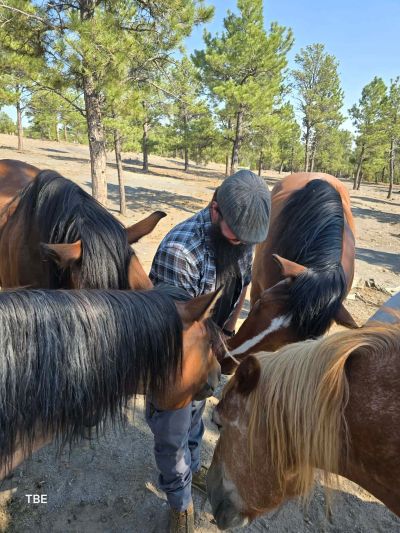
1-Day Equine-Assisted Wellness Programs
Dragonheart Intro to Wellness
One-Day Equine-Assisted Wellness Experience
Designed for: General adult audiences
Typical Group: 5–8 participants
Dragonheart Intro to Wellness is an accessible introduction to the principles behind our equine-assisted approach.
Participants learn how horses perceive and respond to their environment and begin exploring what those interactions can teach us about our own nervous systems, communication, boundaries, attention, and relationships.
Through guided observation, groundwork, mindfulness, and experiential exercises, participants practice noticing the difference between reacting automatically and responding intentionally.
The day introduces foundational Dragonheart concepts including regulation, awareness, pressure and release, boundaries, congruence, trust, and connection.
No previous horse experience is necessary.
This program is ideal for individuals curious about equine-assisted wellness, groups seeking a meaningful shared experience, or participants considering one of Dragonheart's more intensive programs.
Conflict Resolution
One-Day Equine-Assisted Communication & Relationship Program
Designed for: Couples, partners, families, friends, teams, and individuals
Typical Group: 5–8 participants
Conflict is rarely just about the argument happening on the surface. Underneath it may be fear, defensiveness, assumptions, unmet needs, old patterns, different communication styles, nervous-system activation, or attempts to regain safety and control.
Conflict Resolution uses equine-assisted exercises to make some of these invisible dynamics easier to recognize.
Participants explore how pressure is applied and received, how boundaries are communicated, what happens when signals are ignored or misunderstood, and how regulation changes our ability to listen, communicate, and problem-solve. Rather than teaching people how to "win" conflict, the program focuses on developing the ability to remain connected to oneself while remaining curious about another person's experience.
Participants practice regulation, clear communication, listening, boundaries, perspective-taking, collaborative problem-solving, rupture and repair, and recognizing when a conversation needs to pause before productive communication can continue.
The goal is not a relationship without conflict.
It is learning how to move through conflict without unnecessarily damaging the relationship or abandoning yourself in the process.
Micro-Manipulations: The Quiet Transfer of Choice
One-Day Experiential Awareness & Communication Program
Designed for adults seeking greater awareness of influence, boundaries, communication, and personal agency
Typical Group: 5–10 participants
Manipulation is not always obvious.
Sometimes it appears in small interactions that are easy to dismiss: a question that does not really allow a no, a joke carrying an expectation, affection withdrawn after a boundary, persistent explanations after an answer has already been given, subtle guilt, strategic confusion, or pressure disguised as concern.
Individually, these moments may seem insignificant. Repeated over time, however, they can gradually change who gets to make decisions, whose needs receive priority, and how safe a person feels saying no, not yet, I disagree, or I changed my mind.
Micro-Manipulations: The Quiet Transfer of Choice is a one-day experiential program designed to help participants recognize these subtle shifts without teaching them to distrust every imperfect interaction.
The program explores the difference between healthy influence, persuasion, negotiation, misunderstanding, conflict, and manipulation. Rather than labeling people as “toxic” or attempting to determine someone else's intentions, participants learn to examine observable patterns: What happened? What was requested? Was there genuine room to decline? What happened after a boundary was expressed? And who ultimately carried the consequences of saying no?
Through discussion, practical exercises, scenario work, body-awareness practices, and guided reflection, participants explore guilt, obligation, reciprocity, urgency, emotional leverage, moving goalposts, plausible deniability, selective misunderstanding, boundary testing, pressure disguised as choice, and other subtle ways autonomy can be eroded.
Participants also learn to notice their own communication. Most people influence others, sometimes without realizing it. The goal is not simply to recognize manipulation coming from someone else, but to develop communication that leaves other people genuinely free to choose.
Throughout the day, participants practice slowing interactions down, checking assumptions, separating explanation from obligation, identifying what belongs to them and what belongs to someone else, asking clarifying questions, holding boundaries without excessive justification, recognizing when a conversation has stopped being collaborative, and returning decisions to the person who actually owns them.
The goal of Micro-Manipulations is not to make participants suspicious of everyone around them.
It is to make subtle pressure easier to see.
Because meaningful consent requires more than the ability to say no. It requires enough clarity, safety, and liberty for no to remain a real option.